Five stages connect a recovered tree with its next purpose. The journey follows the wood’s condition, not a fixed production clock.
01
Recover / Start with the neighborhood.
Start with the neighborhood.
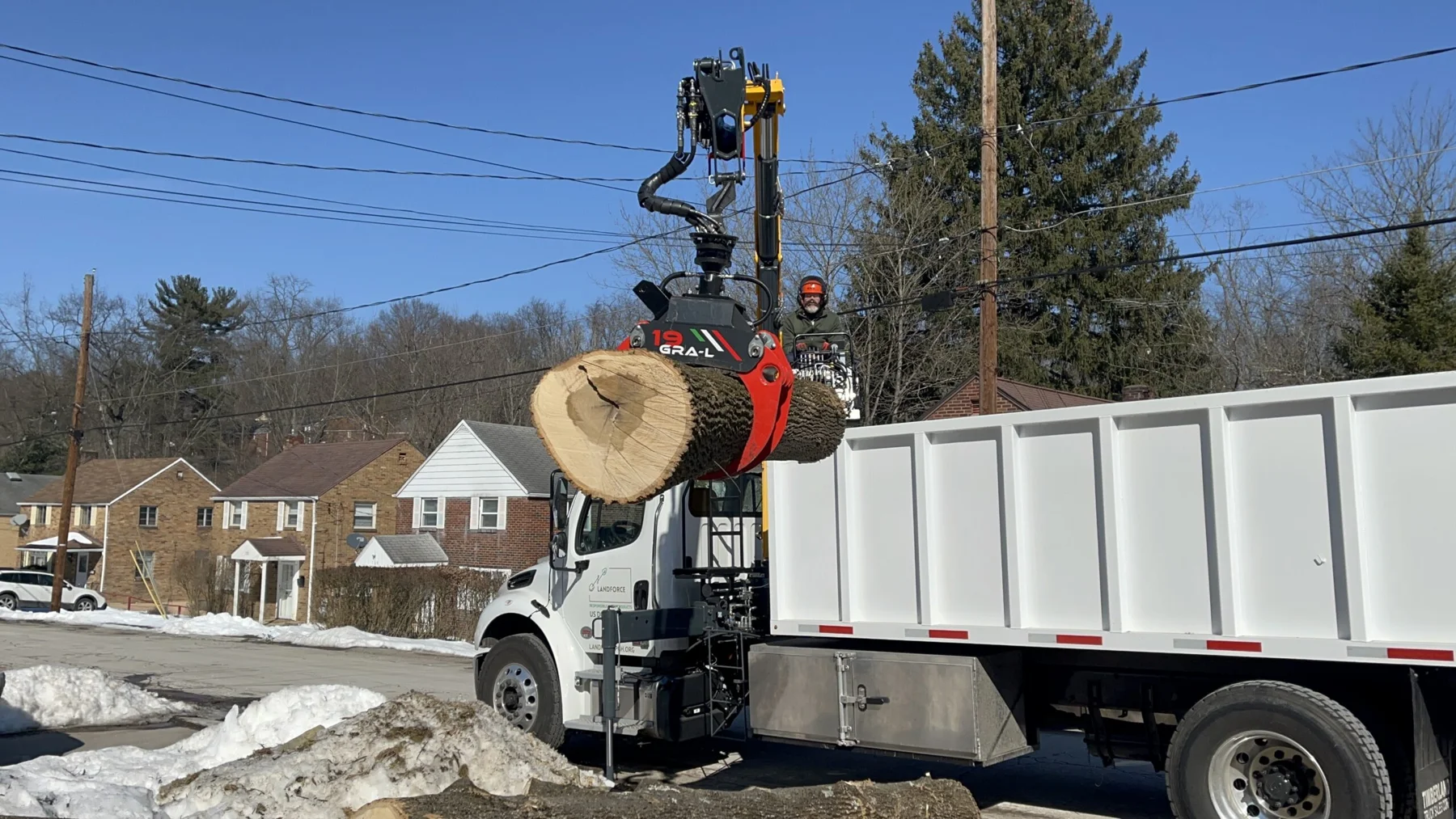
Recovery begins with a conversation between the wood team, property owner, and professional arborist. Trees are already down or scheduled for removal; Landforce does not fell them.
02
Mill / Find the potential inside.
Find the potential inside.
The sawyer selects cuts to produce useful boards, beams, and dimensional lumber while aiming to minimize waste.
03
Air dry / Give the wood time.
Let it breathe.
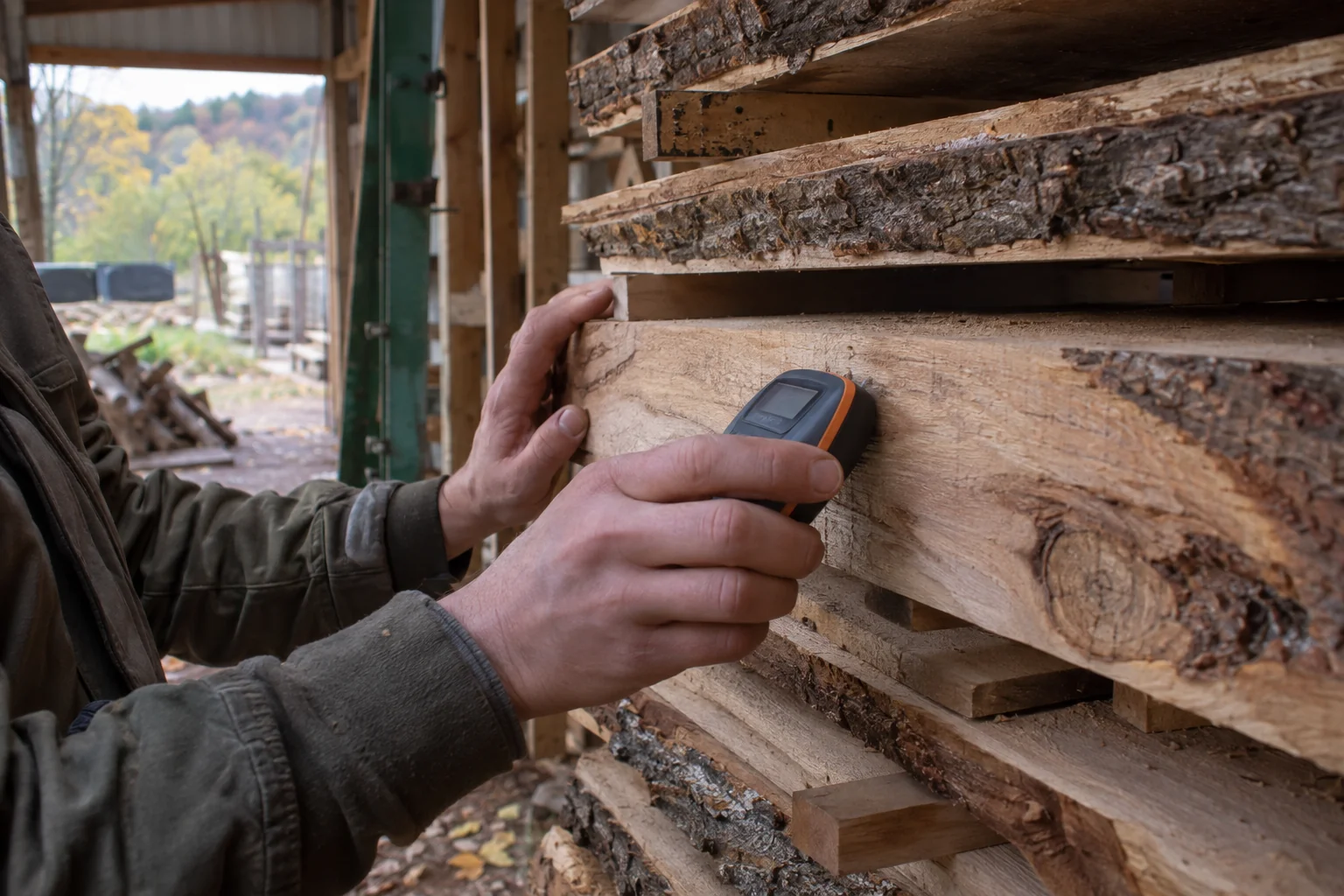
Milled material is stacked to allow airflow. The team monitors moisture over months, and sometimes up to a year, before moving suitable lumber to the kiln.
04
Kiln dry / Prepare for the next use.
Prepare for the next use.
Once lumber has dried sufficiently, it can enter the vacuum kiln. Properly kiln-dried material can then move toward retail use.
05
Make / Build the next chapter.
Build the next chapter.
Recovered local wood becomes material for personal and professional projects. Species, dimensions, quantity, and intended use help the team understand what you need.
Between the stages
Moisture monitoring helps the team understand where lumber is in the drying process. Ask about the condition of your particular material.
Landforce archive photographs appear alongside generated illustrations of wood recovery, processing, and making. Illustrative scenes do not document Landforce’s staff, equipment, facilities, or current inventory.


 01
01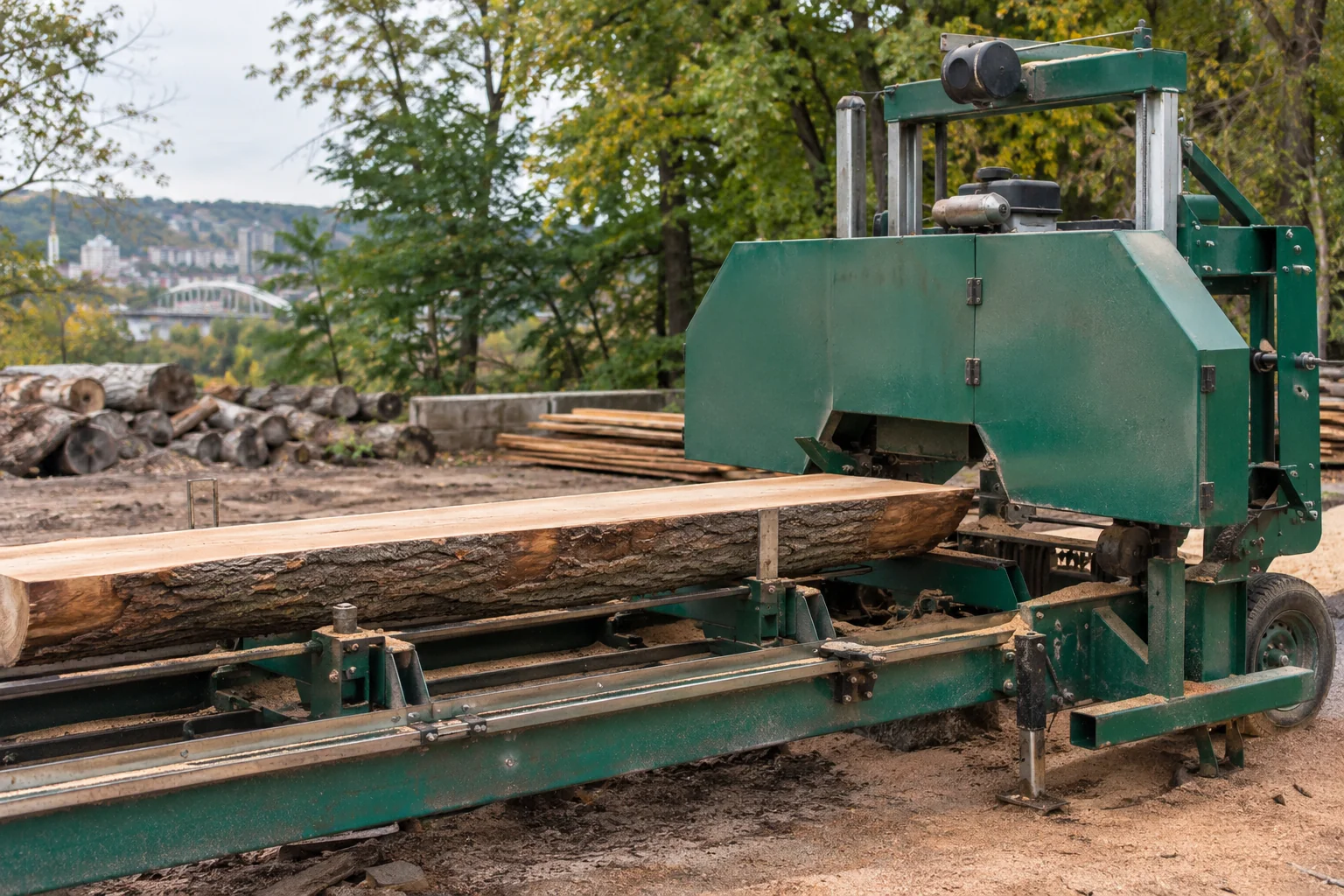 02
02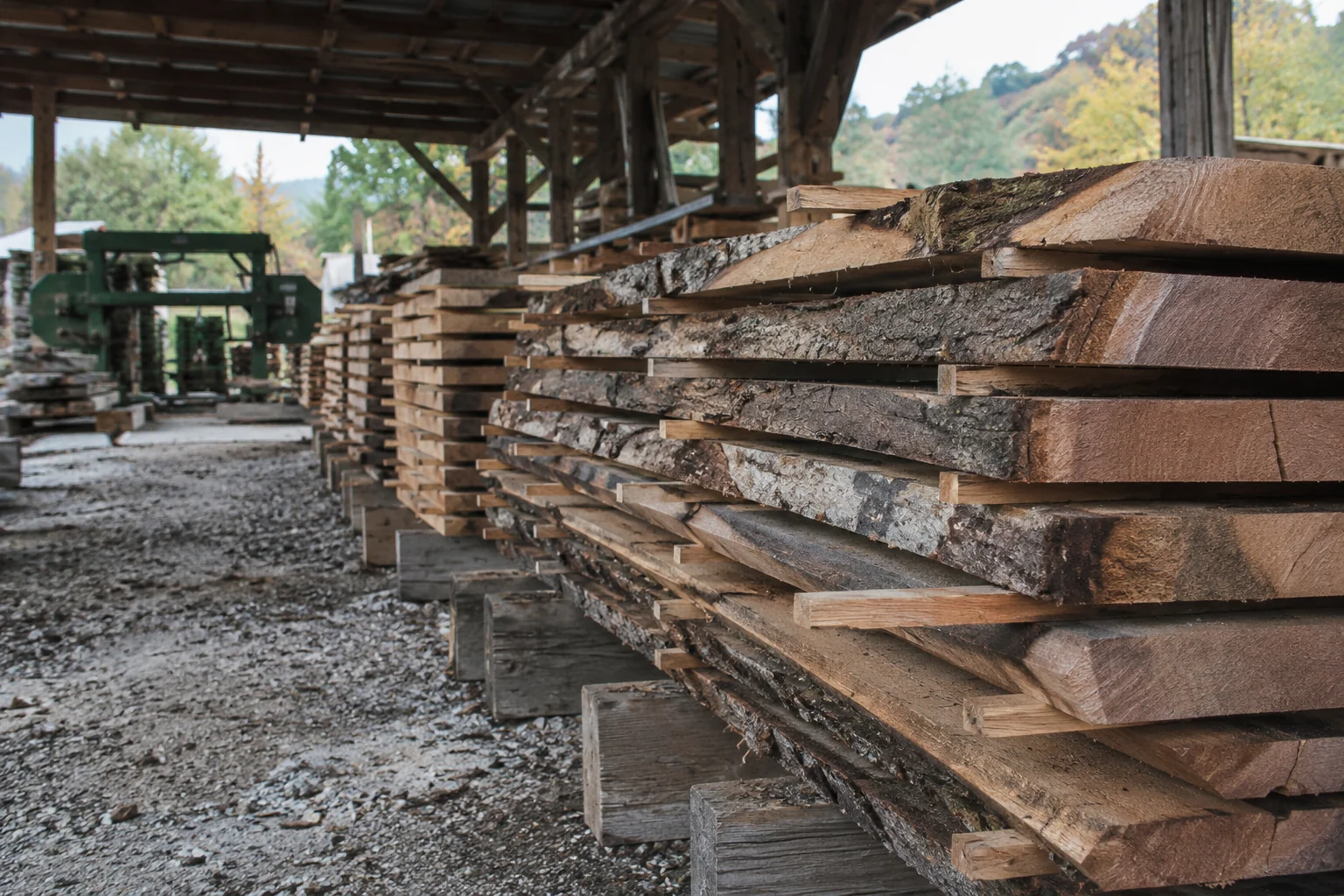 03
03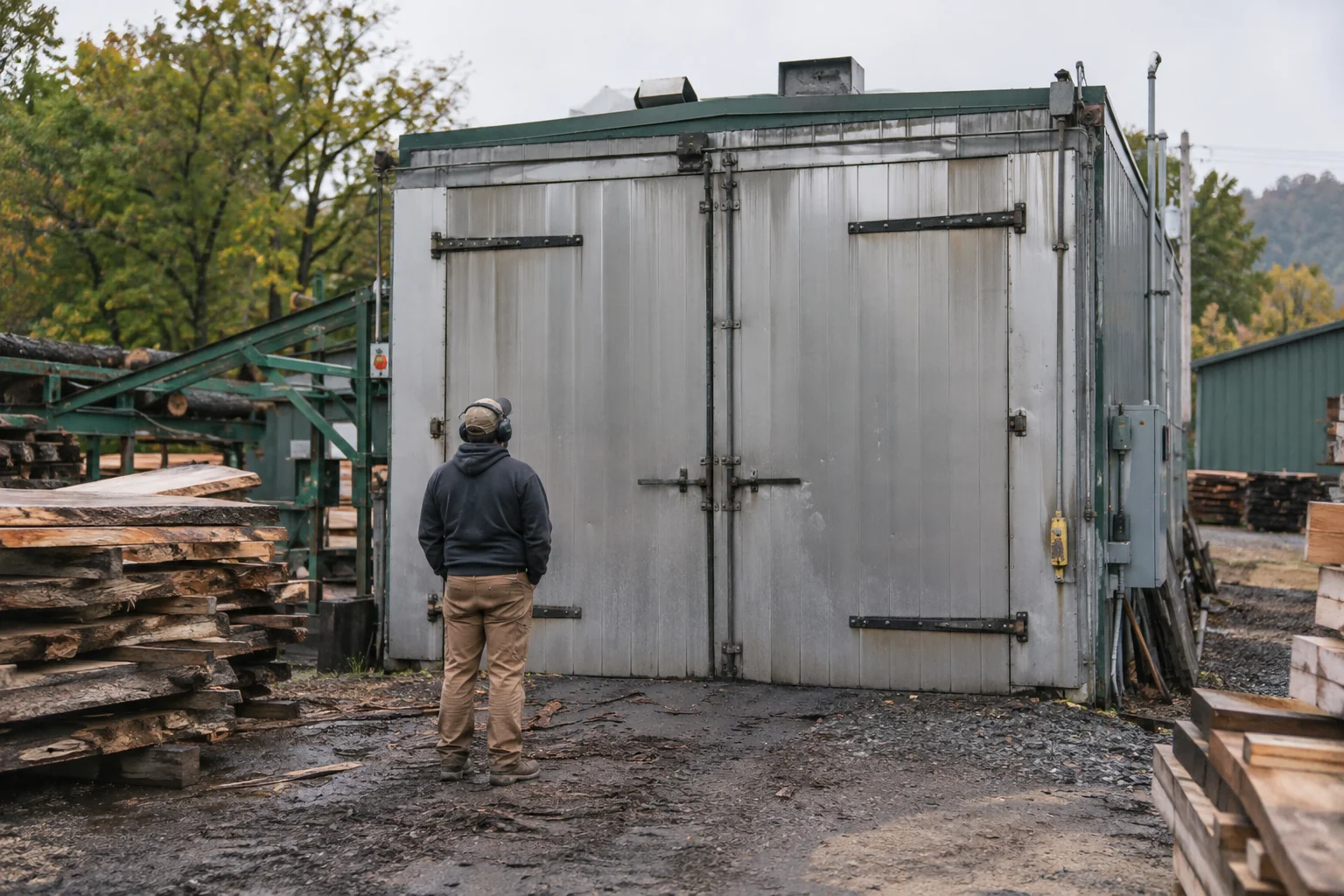 04
04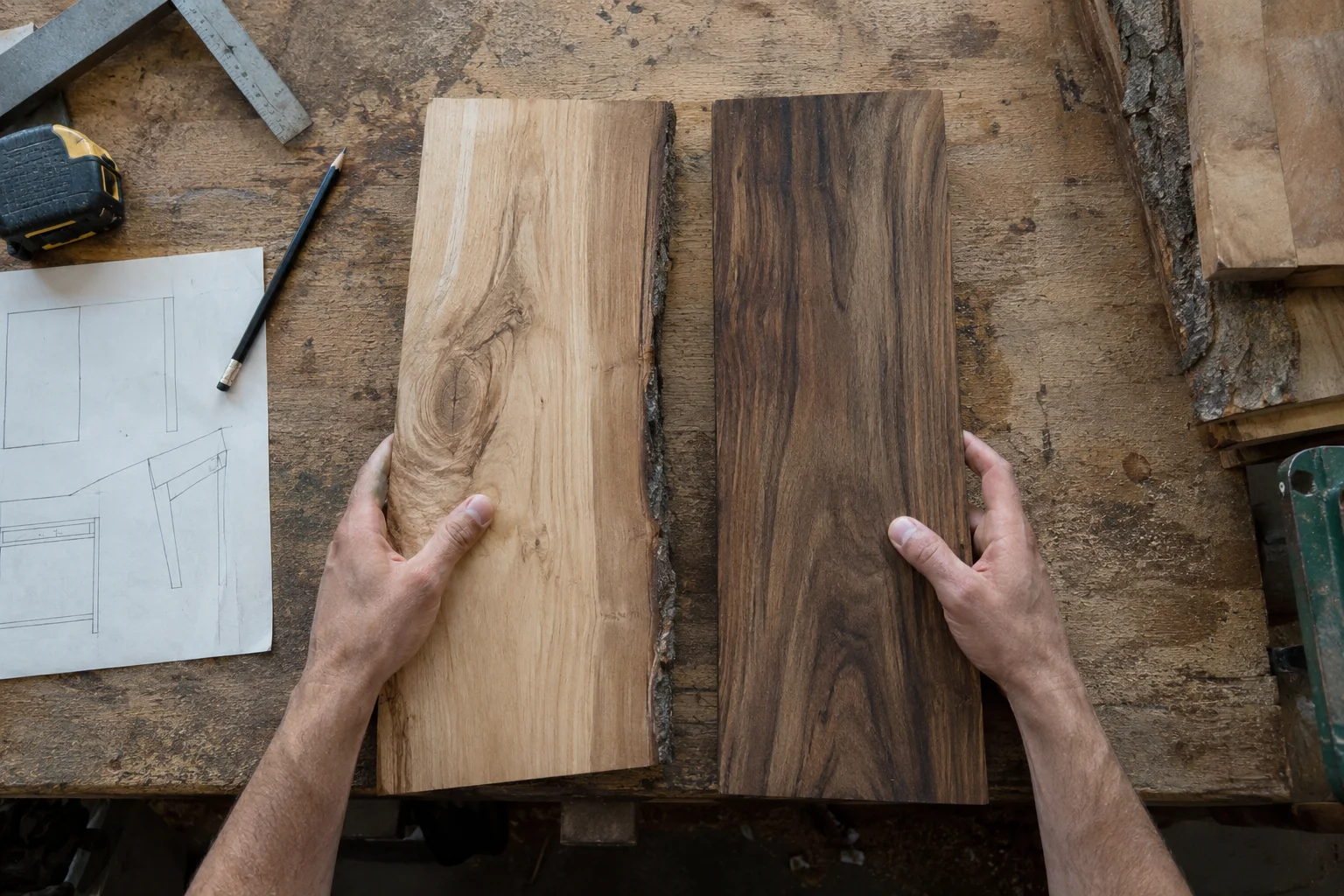 05
05